
Learn how to build a cybersecurity-first IT infrastructure. Explore 'secure by design' principles, risk management, and integrating security from day one.
Cybersecurity-First IT Implementation
When organizations launch new technology projects—whether deploying an ERP system, migrating databases to the cloud, or rolling out a remote work policy—their primary focus is typically on functionality, timeline, and budget. Does the software work? Is it on schedule? What is the cost?
Unfortunately, security is often treated as an afterthought. It is "bolted on" at the end of the deployment phase or only addressed when a vulnerability scan detects critical flaws right before launch. This reactive approach is expensive, slows down project timelines, and exposes organizations to severe security risks.
In contrast, a Cybersecurity-First IT Implementation strategy ensures that security is integrated into every project from day one. Here is why secure-by-design implementations are essential and how to establish them in your organization.
1. The Real Cost of "Bolt-On" Security
Treating security as a final review gate rather than an ongoing design requirement creates several strategic problems:
- Architectural Flaws: Some security issues are structural. If database access or network paths are designed poorly from the start, resolving them later can require rebuilding entire components of the application.
- Deployment Delays: Finding critical security gaps late in a project forces development and operations teams to go back to the drawing board, postponing go-live dates.
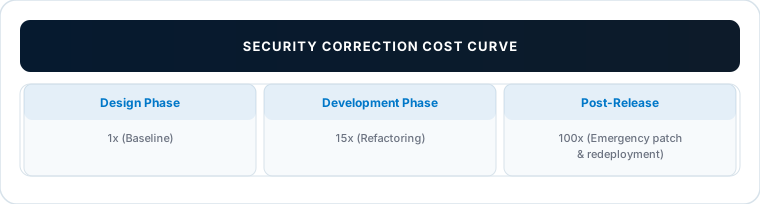
- Increased Costs: According to software engineering studies, fixing a security bug post-production is up to 100 times more expensive than resolving it during the initial design phase.
2. Core Principles of Secure-by-Design IT Projects
To build a cybersecurity-first culture, IT implementation teams must adopt several core design principles:
Principle A: Shift-Left Security
"Shift-left" means moving security checks to the earliest possible stages of the project lifecycle.
- During the requirements gathering phase, define security requirements (e.g., encryption methods, authentication protocols, and regulatory compliance standards) alongside functional ones.
- During development and configuration, perform continuous code analysis and vulnerability scanning rather than waiting for a final penetration test.
Principle B: Least Privilege by Default
When configuring user accounts, databases, and API integrations, apply the principle of least privilege from the start. Systems should only have the permissions absolutely necessary to perform their functions.
- Avoid using admin accounts for routine application services.
- Configure network firewalls to block all traffic by default and only open specific, required ports.
Principle C: Defense in Depth
Never rely on a single line of defense. Assume that any individual security control can fail.
- If your firewall is breached, ensure your network segmentation stops lateral movement.
- If network segmentation fails, ensure your data is strongly encrypted at rest.
- If the data encryption is bypassed, ensure your access logs immediately flag the anomalous data export.
3. A Roadmap for Cybersecurity-First Implementations
How does a project team put these principles into practice? Follow this four-stage implementation roadmap:
- Threat Modeling (Planning): Before writing code or provisioning servers, conduct a threat modeling exercise. Identify the system's assets, think about what could go wrong, and design security controls to mitigate those risks.
- Continuous Verification (Execution): Use automated scanners to check code, packages, and infrastructure configurations for known vulnerabilities throughout the implementation phase.
- Third-Party Risk Assessment (Integration): If your new system integrates with external vendors or SaaS platforms, evaluate their security postures, data storage locations, and access controls.
- Incident Response Planning (Operation): Design the system to fail securely, not only to run under normal conditions. Create an incident response plan detailing how to detect breaches, contain damage, and restore operations if the system is compromised.
Conclusion: Security as a Foundation for Innovation
A cybersecurity-first IT implementation strategy does not slow down innovation; it enables it. When you build systems on a secure, stable foundation, you reduce operational risks, protect your brand's reputation, and ensure that your technology stack can support future growth without requiring expensive, disruptive security overhauls.
At InvisoCore Technologies, we build security into the fabric of every IT project. Whether we are assisting with cloud migrations, deploying UEM systems, or integrating business systems, our secure-by-design methodology ensures your infrastructure is resilient, compliant, and ready to scale.
Planning a major IT implementation? Contact the InvisoCore team today to ensure your project is secure from day one.
Ready to strengthen your technology foundation?
InvisoCore Technologies helps businesses design, deploy, and manage secure IT infrastructure, endpoint management, cloud platforms, and connected business systems.